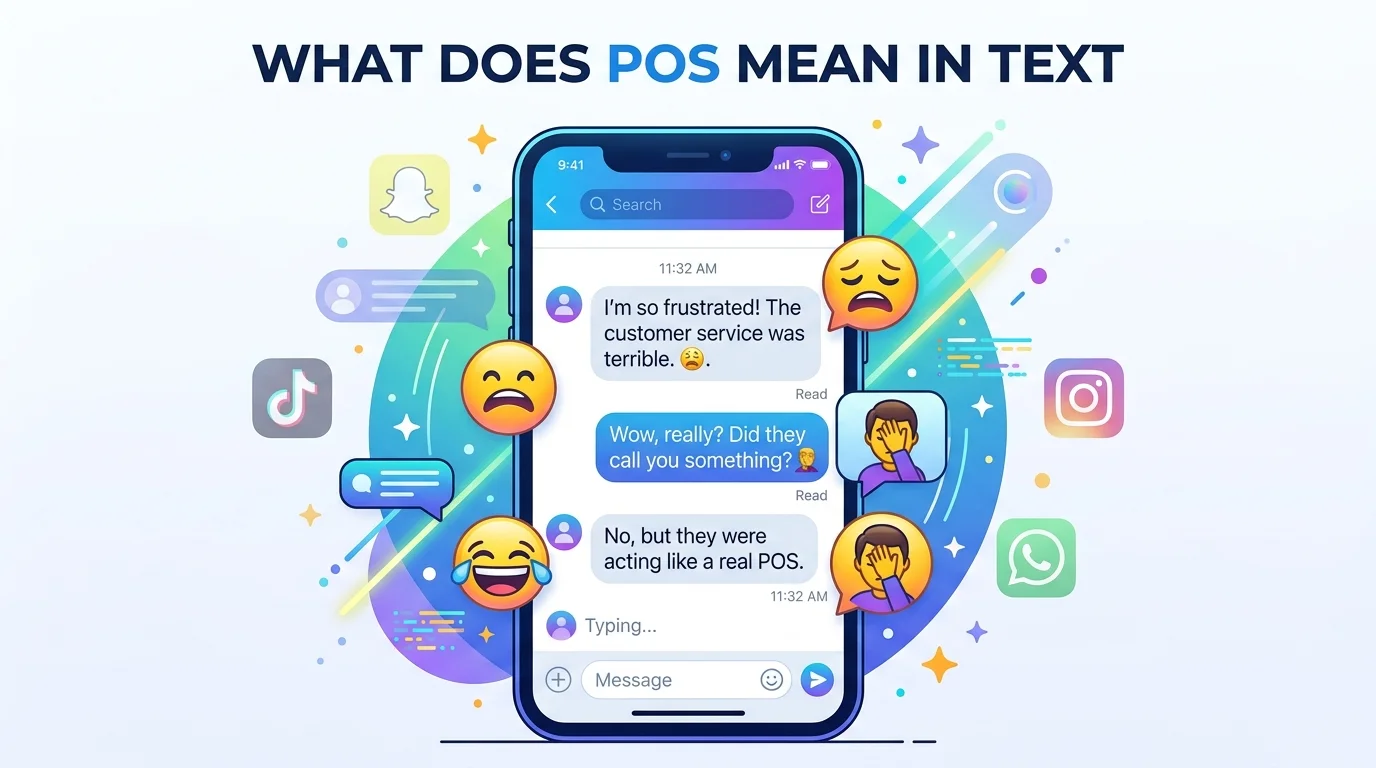

Have you ever been texting someone and suddenly saw POS appear in a chat, leaving you confused? Maybe it came from a friend, a social media comment, or a group chat, and you weren’t sure whether it was playful, serious, or even offensive.
Texting acronyms are everywhere, and some of them carry multiple meanings depending on context, tone, and platform.
So, what exactly does POS mean in text? Is it a joke, a critique, or something more aggressive? In this article, we will break down the full meaning of POS, explain its origins, explore tone variations, platform-specific usage, and real-life examples. By the end, you will confidently understand and use this slang in modern digital communication.
What Does POS Mean in Text
In texting, POS most commonly stands for Piece of S*. It is often used to describe frustration, anger, or strong disapproval towards a person, object, or situation.
For example, someone might text POS when annoyed with a device that broke or to express disdain about someone’s behavior.
While it can be offensive due to the language, the acronym is widely used online, in texting, and on social media, especially among younger audiences who rely on shorthand for quick emotional expression.
Occasionally, POS may appear in more technical or professional contexts with different meanings, such as Point of Sale, but in casual texting, Piece of S* dominates.
Background and Origin of POS
The abbreviation POS emerged from early internet and texting culture. Acronyms like LOL, WTF, and SMH paved the way for expressive shorthand that could convey strong emotions quickly.
Users in forums, instant messaging platforms, and SMS texting sought ways to express frustration or contempt without typing full sentences.
POS became a convenient, impactful way to do this, emphasizing emotion while keeping the message short.
Its popularity grew on social media platforms like Twitter, Facebook, and Reddit, and it eventually spread to TikTok, Instagram, and Snapchat.
Today, POS is widely recognized as a shorthand for expressing disapproval, annoyance, or contempt in digital conversations.
Detailed Meaning in Text
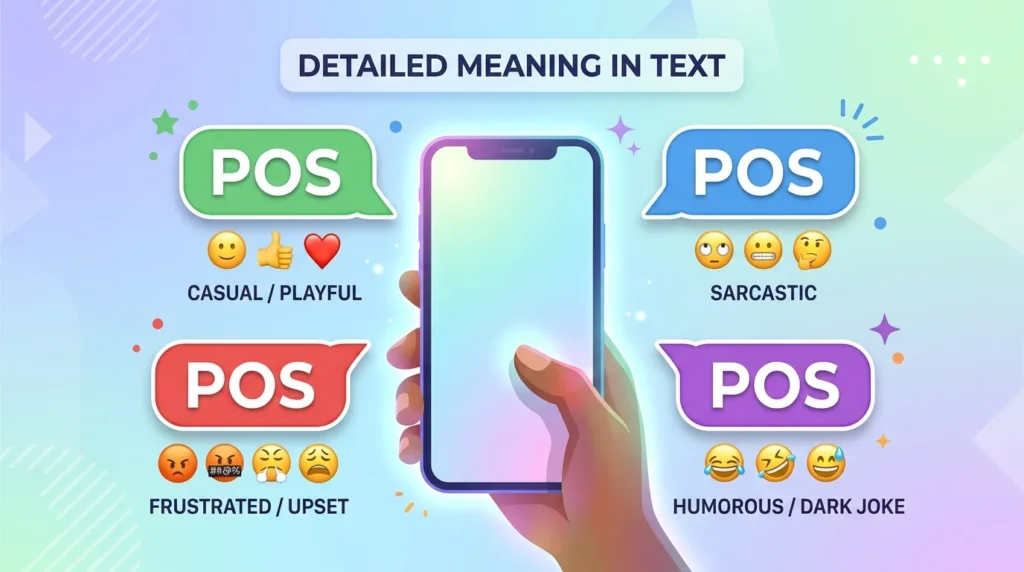
The meaning of POS can vary depending on tone, context, and relationship between texters. Here are the most common interpretations:
Casual Frustration
In casual texting, POS is used to express mild irritation or annoyance. For example, a friend may send a picture of a broken gadget, and replying with POS signals you understand their frustration.
This tone is informal, not overly harsh, and is commonly used among peers or friends who share humor and understanding.
Strong Disapproval
Sometimes, POS is used to communicate stronger feelings of anger or disdain. For example, if someone behaves unfairly or a situation feels particularly irritating, replying with POS shows strong negative emotion. This tone can be aggressive if not softened with context, emojis, or punctuation.
Sarcastic or Humorous Usage
Some people use POS in a sarcastic or humorous way. For instance, in a meme or playful teasing, calling something a POS exaggerates frustration for comedic effect.
This is common in online communities and group chats, where humor and exaggeration enhance engagement and reactions.
Empathetic Frustration
Occasionally, POS is used to convey empathy for someone else’s frustrating situation. By labeling an object, situation, or experience as a POS, you validate the other person’s feelings while expressing mild shared exasperation. Context and audience awareness are key to this interpretation.
Platform-Specific Usage
Snapchat
On Snapchat, POS is often used in ephemeral messages or direct replies to stories. Users rely on quick shorthand and expressive emojis to convey tone.
For example, a friend posting about a minor disaster may receive a reply with POS 😩, indicating frustration but keeping the tone light.
Snapchat’s playful, fast-paced nature encourages casual, humorous use of acronyms like POS.
See Also: What Does SMFH Mean in Text? Find Out Its True Use
TikTok
On TikTok, POS frequently appears in video captions, comment sections, and reaction clips. It is used humorously, sarcastically, or exaggeratedly, often in response to absurd or frustrating content.
For example, a viral video showing someone struggling with a simple task may receive a POS comment, highlighting disbelief or humor.
TikTok amplifies sarcasm, memes, and exaggerated emotions, making POS a popular shorthand for reactions.
On Instagram, POS is commonly seen in direct messages, story replies, and comment threads. Users employ it to react to posts, videos, or memes that are annoying, frustrating, or absurd.
Emojis often accompany POS to clarify tone. Influencers and everyday users alike encounter POS in response to viral content, sharing a relatable emotional shorthand that conveys frustration or humor.
WhatsApp and General Texting
In WhatsApp chats and traditional texting, POS is versatile but can feel harsher because textual tone is inferred rather than visual.
Among friends, POS can be playful or sarcastic. With acquaintances, it may appear aggressive if not accompanied by tone indicators like emojis or punctuation.
Proper interpretation depends on relationship context, previous conversations, and shared understanding of slang norms.
Real-Life Texting Examples
Here are 12 examples showing POS in different texting contexts:
- Casual: Friend: My phone broke again. You: POS 😩
- Funny: Friend: I spilled coffee everywhere. You: POS lol
- Serious: Sibling: The car won’t start. You: POS, that’s annoying
- Teasing: Friend: I failed the game challenge. You: POS, better luck next time
- Sarcastic: Crush: I forgot our plans. You: POS, classic
- Group Chat Humor: Friend: I ate all the snacks. You: POS 😆
- Mild Annoyance: Friend: I missed the bus. You: POS, again?
- Meme Reaction: Video of someone failing: POS lol
- Flirty: Crush: I lost your message. You: POS, you’re lucky I forgive you
- Exaggerated Disbelief: Friend: I paid $100 for this. You: POS, ridiculous
- Gaming: Teammate: DC mid-match. You: POS, we were winning
- Sympathy: Friend: My project got deleted. You: POS, that sucks
Other Meanings of POS
While Piece of S* dominates casual texting, POS may also appear in other contexts:
- Point of Sale – Used in business and retail discussions
- Positive – In technical or scientific contexts
- Parent Over Shoulder – Occasionally used humorously in texting to warn about privacy
- Piece of Software – Informal tech discussions
Understanding context is critical to interpreting POS accurately, especially outside casual texting.
See Also: What Does DC Mean in Text? Learn the Surprising Meaning
Comparison Table: Similar Slang Words
| Slang | Meaning | Usage | Tone |
| POS | Piece of S*** | Expressing frustration, disdain | Casual/Annoyed/Sarcastic |
| SMH | Shaking My Head | Mild disbelief or frustration | Casual/Neutral |
| FML | F*** My Life | Expressing strong frustration | Serious/Exaggerated |
| WTF | What The F*** | Shock, disbelief | Casual/Annoyed |
| LOL | Laugh Out Loud | Humor or amusement | Funny/Playful |
| LMAO | Laughing My Ass Off | Extreme humor | Funny/Exaggerated |
| IDK | I Don’t Know | Lack of knowledge | Casual/Neutral |
Meaning from a Girl vs a Guy
Girls
When a girl uses POS, it is often sarcastic, playful, or mildly frustrated. She may pair it with emojis like 😏, 😂, or 😩 to soften the tone.
Her intention is usually not harsh but aims to express frustration humorously. Context and familiarity with the recipient influence interpretation.
Guys
When a guy uses POS, tone can range from playful sarcasm to more blunt frustration. Without emojis, it may appear harsher or more serious.
Understanding the conversation’s context and prior interactions is essential to avoid misinterpretation. Among friends, it is often teasing; with strangers, it may seem rude.
When to Use and When Not to Use POS
Use POS When:
- Chatting with friends or family who understand your humor
- Reacting to memes, jokes, or minor frustrating situations
- Sharing mild or humorous exasperation
Avoid POS When:
- Communicating with professional contacts
- Talking to people unfamiliar with internet slang
- Responding to serious or sensitive topics
Misusing POS can lead to misunderstandings, making the texter appear rude or dismissive.
Frequently Asked Questions
What does POS mean in texting?
It stands for Piece of S*, commonly used to express frustration, annoyance, or disdain.
Is POS offensive?
It can be, due to the language implied. Among friends, it is often playful; in formal contexts, it may seem rude.
Can POS have other meanings?
Yes, POS can mean Point of Sale, Positive, Parent Over Shoulder, or Piece of Software depending on context.
How is POS used on social media?
It is often used in comments, captions, and memes to react humorously or express frustration.
Should I use POS with strangers?
No, avoid it in professional or unfamiliar conversations to prevent offense.
How do I know if POS is joking or serious?
Check emojis, punctuation, prior conversation history, and relationship familiarity to interpret tone accurately.
Is POS popular among younger audiences?
Yes, it is commonly used by teens and young adults in texting, memes, and social media chats.
Conclusion
Understanding What Does POS Mean in Text is essential for modern digital communication. While it primarily stands for Piece of S*, tone, context, and platform determine its interpretation.
From playful banter on Snapchat to sarcastic humor on TikTok or Instagram, knowing how and when to use POS ensures accurate reading of messages and appropriate responses.
Awareness of alternative meanings and audience sensitivity prevents misunderstandings. By mastering POS, you can navigate texting slang confidently, making your digital conversations more expressive, humorous, and relatable.
See Also: What Does TF Mean in Text? Internet Slang You Need to Know